Blog

A Meta-Analysis of Childhood Screen Usage and Depressive Symptoms

Introduction

What evidence is there for an association between screen and/or social media usage and depressive symptoms in children and adolescents? Overall, the research evidence that there is indeed a positive association between several types of screen usage and childhood/adolescent depressive symptoms. However, some studies were unable to identify a clear correlation between certain, specific types of media use and these same symptoms and others still suggested that gender might play a role in the association. Therefore, associations relied a great deal on what type of media usage was being considered and who was using it in regard to depressive symptoms in adolescence.

Amount of Exposure and Type

Much of the research analyzed indeed suggested a positive association between the amount of screen time and depressive symptoms in adolescence and childhood. Houghton (2018) collected data from approximately 1,800 adolescents (aged 10-17) at six different periods over the course of two years. The adolescents self-reported their own depression symptoms, the amount of time they spent on screens and what activities they did when using the screens. Houghton and his team found a modest positive association between screen use and depressive symptoms after the two years. They also found a small, positive association for the reciprocal (i.e. that depressive symptoms predicted higher levels of screen use later on as well), which could indicate that while media use might predict depressive symptoms later on, media is something that adolescents are turning to more often if they are depressed. Despite these findings, there wasn’t enough support for a longitudinal association (via a Random Intercept Cross Lagged Panel Model) here.

Grøntved (2015), on the other hand, conducted a longitudinal study and was able to provide this type of association with regards to TV-viewing and depressive symptoms. He studied around 500 15-year-olds adolescents, collecting data from them first in 1997-1998 and then again six years later. Half participated in a 12-year follow-up well. Depressive symptoms were assessed on the MDI scale while TV and computer time were self-reported. His team concluded that each additional hour of TV-viewing was associated with greater odds of mild, moderate or severe depression in young adulthood. Primack (2009) conducted a similar study and also found that each additional hour of daily television in youth increased the odds of developing depression later on, but found that “computer use” had no effect on these odds. Ferguson (2017) studied media exposure in children as well but found that only excessive usage led to increased depressive symptoms in childhood and adolescence. This perhaps coincides with a hypothesized media theory called “The Goldilocks Effect” that states that too little or too much exposure might have negative effects, but ‘just the right amount’ is perfectly fine and in fact, beneficial to developing minds.

Despite this evidence for a positive association, there are studies that have found no association between depressive symptoms and frequency of technology use. Nesi (2015) cites at least two of these studies; Davila (2012) and Jelenchick (2013) both found no association between amount of media exposure and depressive symptoms. Furthermore, in Merritt’s (2016) study of youth aged 10-14, she found that violent video games and violent television (two types of media frequently criticized for its possible harmful psychological effects on children) did not predict anxiety or depression in her sample when they were surveyed again a year later. These conflicting results lead to a very ambiguous conclusion about amount of exposure and later depressive symptoms. Perhaps then, gender is what we must look to in trying to interpret these results.

Gender

Several studies indeed found that gender differences had an effect on whether or not media exposure increased depressive symptoms. Perhaps the most interesting research that examined gender differences in media use and adolescent psychological problems was done by Ohannessian (2009). The primary goal of her study of around 300 14- to 16- year-olds was to determine whether gender differences were present in type of media absorbed by these adolescents and later psychological problems. These adolescents were surveyed initially and then again one year later. She found that higher media consumption as a sort of protection for boys, but it did the opposite for girls. That is, boys that spent more time watching TV and playing video games had lower levels of psychological problems, while girls who spent more time watching TV and playing video games had higher levels of psychological problems. Nesi (2015) specifically studied using media platforms for social comparison/feedback seeding and later depressive symptoms, with gender a variable that she accounted for. She queried around 600 students initially and then again one year later. In girls, she found a strong positive association between media use for feedback seeking and social comparison, while the association was smaller for boys.

Primack (2009) studied gender differences, electronic media exposure and depressive symptoms seven years after his initial survey of around 4000 adolescents. His findings, however, contradict that of Ohannessian. He found that girls were actually less likely to develop anxiety or depression given the same amount of total exposure as boys. Further still, several studies found gender didn’t play a role at all in determining whether media exposure led to later depressive symptoms. Pantic (2012) studied the association between online social networking and depression in around 160 high school students. Keeping in mind that online social networking was the main method of social comparison and feedback seeking that Nesi (2015) researched, Pantic found that there was no gender difference when it came to associating psychological problems with media use, contradicting Nesi’s study. In the aforementioned study, Grøntved (2015) found no differences between gender either. With these conflicting results and no solid longitudinal study to analyze, an association between gender, media usage and later depressive symptoms is ambiguous.

Conclusion

Overall, most of the research suggests that there is at least a positive association between increased media exposure and having depressive symptoms later in adolescence. However, the presence of conflicting research that found no association make it difficult to decide which conclusion is more plausible. More research, especially that of the longitudinal variety, with larger sample sizes, less self-reporting and more variables, is needed before a definitive causal association between media use and depression can be made. Since a lot of the research was done on specific types of media as well, it’s impossible to blanketly declare that media usage and screen time ‘overall’ causes depression in children.

References

Ferguson, C. J. (2017). Everything in Moderation: Moderate Use of Screens Unassociated with Child Behavior Problems. Psychiatric Quarterly,88(4), 797-805. doi:10.1007/s11126-016-9486-3

Grøntved, A., Singhammer, J., Froberg, K., Møller, N. C., Pan, A., Pfeiffer, K. A., & Kristensen, P. L. (2015). A prospective study of screen time in adolescence and depression symptoms in young adulthood. Preventive Medicine,81, 108-113. doi:10.1016/j.ypmed.2015.08.009

Houghton, S., Lawrence, D., Hunter, S. C., Rosenberg, M., Zadow, C., Wood, L., & Shilton, T. (2018). Reciprocal Relationships between Trajectories of Depressive Symptoms and Screen Media Use during Adolescence. Journal of Youth and Adolescence,47(11), 2453-2467. doi:10.1007/s10964-018-0901-y

Merritt, A., Laquea, R., Cromwell, R., & Ferguson, C. J. (2015). Media Managing Mood: A Look at the Possible Effects of Violent Media on Affect. Child & Youth Care Forum,45(2), 241-258. doi:10.1007/s10566-015-9328-8

Nesi, J., & Prinstein, M. J. (2015). Using Social Media for Social Comparison and Feedback-Seeking: Gender and Popularity Moderate Associations with Depressive Symptoms. Journal of Abnormal Child Psychology,43(8), 1427-1438. doi:10.1007/s10802-015-0020-0

Ohannessian, C. M. (2009). Media Use and Adolescent Psychological Adjustment: An Examination of Gender Differences. Journal of Child and Family Studies,18(5), 582-593. doi:10.1007/s10826-009-9261-2

Pantic, I., Damjanovic, A., Todorovic, J., Topalovica, D., Bojovic-Jovic, D., Ristic, S., & Pantic, S. (2012). Association between online social networking and depression in high school students: Behavioral physiology viewpoint. Psychiatria Danubina,24(1), 90-93. doi:28.12.2011

Primack, B. A., & Swanier, B. (2009). Association Between Media Use in Adolescence and Depression in Young Adulthood: A Longitudinal Study. Arch Gen Psychiatry,66(2), 181-188. doi:doi:10.1001/archgenpsychiatry.2008.532

American Hookup: An Analysis

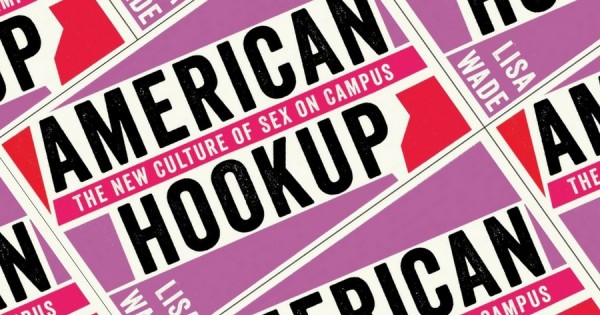
American Hookup: The New Culture of Sex on Campus

In her book, American Hookup: The New Culture of Sex on Campus, sociologist Lisa Wade examines the pervasive sexual hookup culture that dominates America’s higher education system. After gathering extensive research on the topic, Wade determines that America’s young people are crying out for help because this boundless culture of hookup sex on campus is making them anxious and depressed, and in many cases, dissatisfied and traumatized. But the cause of this unhappiness isn’t necessarily the act of hooking up at all. Instead, it’s the establishment of hookup culture as a norm and requirement of being a college student. Wade analyzes the winners and losers of hookup culture, suggesting that there may be fewer winners than society might have us believe.

Wade begins by giving us a how-to guide to hookup culture, specifically the steps that college students take to participate in hookup culture correctly. These steps are 1) pregaming with alcohol, 2) grinding at the party or bar, 3) initiating a hook-up often lacking verbal consent, 4) hooking up and 5) establishing emotional. A failure to do one of these steps might result in a failure to hook-up, the labeling of one as an outsider to the culture or pose the risk that the other party involved gets the wrong impression.

Wade attributes the feminist movement and gay liberation movement of the 60s and 70s to the reemergence of these more permissive attitudes about sex. Feminists hoped to break down the gender stereotypes that had permeated society since the 1800s by allowing women to be more sexually liberal and equal in all aspects of life. Instead, stereotypes about femininity and masculinity became even stronger. And while the sexual double standard is no longer explicitly enforced and women are indeed free to have more masculine pursuits, males have become arguably more evasive of anything considered “feminine”.

Wade explores how college parties lay the perfect groundwork for hookup culture because they manifest drunkenness and horniness. Hookups are imbedded into the party script and institutionalized in higher education. Frequently the “winners” are white, heterosexual fraternity men, but not everyone opts in and not everyone is allowed to either. For some, engaging in hookup culture reaffirms stereotypes about their race, gender or sexuality. Others strive to participate but are shut out because of these same things. Those who choose to abstain are considered losers and feel isolated because hookup culture is so rooted in social life. Those who do opt-in, both male and female, report being unsatisfied and traumatized.

Another important aspect of hookup is the absence of emotions, but as Wade points out “saying we can have sex without emotions is like saying we can have sex without bodies” (Wade, p. 135), which is certainly not the case. In hookup culture, players do what they can to protect themselves at all costs and this means being, careless, carefree and void of emotional attachment. Even when college women do take steps to “be chill”, many men automatically stigmatize women as emotional creatures who naturally are always looking for relationships.

This is not the only form of gender inequality. Men who engage in hookup culture are twice as likely to orgasm than women, a clear example of the pervasive “orgasm gap” that permeates college campuses. Even though it’s common for women to orgasm when they’re in relationships, hookup culture doesn’t promote reciprocity and disrespect towards women is used as a bargaining chip, especially if the woman being hooked up with is deemed “ugly” by the man or his friends. This solidifies male domination and female subordination. It also solidifies the need to meet high standards of beauty to participate and succeed in this culture.

Wade attributes the theory of situational/opportunity rape as to why sexual assault is also extremely prevalent in hookup culture. College campuses, or rather college parties, provide a rape-prone place for rape-supportive people. Coercive behaviors blend into hookup culture and are naturalized, justified and glorified there.

Lastly, Wade checks in with her students several years later, both at the end of their college careers and after they have left hookup culture behind. Unsurprisingly, many who were initially eager to participate have defected. Furthermore, dating has replaced hookup culture in their adulthood but after four years of hookup culture, these students don’t know how to be honest with their intentions or emotions and report failing at relationships.

Lisa Wade is an associate professor of sociology at Occidental College and has degrees in philosophy, human sexuality and sociology. She has a PhD in Sociology from the University of Wisconsin-Madison and a Master of Arts in Human Sexuality from the University of California-Santa Barbara. The research compiled in this book was collected from first-year students in introductory sociology classes or sexuality-themed writing classes at two liberal arts school over the course of six years (2010-2015). She gathered further data from students at colleges across the country that she visited and from student accounts in newspapers about hookup culture. Wade cites numerous research studies and draws data heavily from the Online College Social Life Survey as well.

Wade’s research is widely based in the firsthand accounts from her students which is cause for some skepticism. These students were told to disclose only what they felt comfortable sharing, and while it’s probable that many of them indeed gave truthful accounts, there is always the problem of concealment and enlargement when self-reports are involved (Hyde & DeLamater, 2017, p. 47). That being said, many of Wade’s points are rooted in fact.

The emergence of a new culture of sex, or at least the emergence of different attitudes and practices regarding casual sex and hooking than those of previous generations, has been supported by other research. Monto and Carey found in their analysis of sexual attitudes and practices between 1988 and 2012 that young adults of the current era were far more likely to engage in sex with a casual date or pickup and less likely to report sex with a regular partner (Monto & Carey, 2014). Young adults are interacting with sex much different than the generations before them, but this hookup culture isn’t easily accessible to all of them either.

In a recent study of racial inequalities in college, it was found that White students reported 4.7 hookup partners compared to averages of Black, Latino and Asian students who reported 3.3, 3.2 and 2.2 hookup partners, respectively. These variances increase when you take gender into account, as White women reported double the number of hookups than the average for all other groups of women and white Asian men, for example, reported half as many hookups as White men (Spell, 2016). This supports Wade’s argument that some races are valued more over others in hookup culture and that hookup culture is dominated by White people.

Inequalities exist among men and women as well within the context of the physical hookup as well. The “orgasm gap” Wade speaks of, where women are less likely to orgasm in casual sex encounters than men, is very real. The phenomenon that women of the same age are more likely to orgasm when they have sex in the context of a committed relationship is rooted in other research as well (Hyde & DeLamater, 2017, p. 239-240). These sentiments are echoed in the words of her students and results of the Social Life Survey.

The evidence for alcohol’s prevalent role in hookup culture cannot be denied either. Fielder and Carey found that a median of three alcoholic drinks preceded 64% of hookups in college (Fielder & Carey, 2011). A similar percentage was found in a study by LaBrie, and she also found that among these hookups, only 42.9% of students reported that if alcohol hadn’t been involved, they would’ve still hooked up with the sexual partner (LaBrie et. al, 2014). In addition, studies have found that 25% of students that drink to the point of blacking out engage in sexual activity during their blackout (White et al., 2003), which suggests that risky sexual behavior is present. These studies, as well as others, prove how embedded alcohol is in hookup culture.

            Another recent study presents a strong case for sexual assault’s prevalence among hookup culture. In a survey of students at a liberal arts university, 78% percent of unwanted vaginal, anal and oral incidents took place while partners were “hooking up”. Furthermore, a fourth of the students surveyed who engaged in hooking up also reported being explicitly, while none of the students who had never hooked up reported this (Flack et. al, 2017). Sexual assault and hookup culture frequently coincide with one another and the college sexual field promotes male dominance, sexism, false beliefs about rape, hypermasculinity and homophobia.

Though some of Wade’s research can be disputed and the nature of her qualitative methods warrant some query when trying to apply her claims to the entirety of the American college system, Wade’s research is validated by many and presents an overall accurate, in-depth portrayal of what casual sex is like in college. And her research is important. It not only aims to inform all generations about the sex culture that penetrates college campuses, it also provides a compelling picture as to why this culture must change. Few win in the end. Perhaps, as Wade stated in her conclusion, we must continue to say yes to casual sex, but no to “the absence of care, unfair distribution of pleasure, unrelenting pressure to be hot and risk of sexual violence” (Wade, p. 246) that currently accompanies casual sex in college. Changing the culture will change the game and maybe, in turn, make sex not so much of a brutal game at all.

References

Fielder RL, Carey MP. Prevalence and characteristics of sexual hookups among first-semester female college students. Journal of Sex and Marital Therapy. 2010b;36(4):346–359. doi: 10.1080/0092623X.2010.488118.

Flack, W. F., Daubman, K. A., Caron, M. L., Asadorian, J. A., D’Aureli, N. R., Gigliotti, S. N., . . . Stine, E. R. (2007). Risk Factors and Consequences of Unwanted Sex Among University Students. Journal of Interpersonal Violence, 22(2), 139-157. doi:10.1177/0886260506295354

Hyde, J. S., & DeLamater, J. D. (2017). Understanding human sexuality(13thed.). New York, NY: McGraw Hill.

LaBrie, J.W., J. F. Hummer, T. M., Ghaidarov, A. Lac, and S. R. Kenney. 2014. “Hooking up in the College Context: The Event-Level Effects of Alcohol Use and Partner Familiarity on Hookup Behaviors and Contentment.” Journal of Sex Research 51 (1): 62–73.

Monto, M. A., & Carey, A. G. (2014). A New Standard of Sexual Behavior? Are Claims Associated With the ‘‘Hookup Culture’’ Supported by General Social Survey Data? Journal of Sex Research, 51(6), 605-615. doi:10.1080/00224499.2014.906031

Spell, S. A. (2016). Comparing Intimacies: Race Relations and Racial Inequality in Hookup Culture. University of Pennsylvania Scholarly Commons. doi:1-1-16

White, A. M. (2003). What happened? Alcohol, memory blackouts, and the brain. Alcohol Research and Health, 27(2), 186–196

Modern Family and Modern Families

Modern Family and Modern Families: How TV Portrays Various Family Arrangements

Television has always brought my family together. When I was younger, I remember us gathering around our television and eagerly tuning into our favorite shows every week. In the comfort of our home, we watched our favorite characters and families overcome both comical and serious hardships, just as our family went through our own highs and lows of daily life. My nuclear family related to the nuclear families we saw on television, but we also found ways to connect to other familial arrangements that were portrayed on screen, albeit these types of family portrayals were not exceedingly common.

Diversity and representation in the media has changed drastically since television’s conception. The word ‘family’ means so much more now than it did when my parents were growing up. This change in connotation is related to the growing representation of non-nuclear families in film and TV. For example, the closest my parents had to a television depiction of a ‘blended family’ was probably The Brady Bunch; but my generation and those younger than me have programs like Modern Family and The Fosters to portray more blended, atypical familial arrangements. And while the nuclear family is still arguably the most typical family arrangement in the United States, there are countless other family types in America and representing them on screen helps to naturalize them and allows for viewers to connect to stories that resemble their own. Walter Podrazik, a consulting curator of the Museum of Broadcast Communications, said of family representation on TV, “[Family] is a shortcut to instant identification. It’s ‘Oh yeah, I’ve got one of those,’ or ‘I came from a family like that.’ Then it’s just a matter of how much fun you want to have with it or how dramatic you want to make it. It’s interesting that so many of the plots, whether it’s now or going back 50 years are about the family coming together” (France, 2010). And it’s true. When we see any type of family coming together on the screen, it shapes the way we feel about our own family and the families we see around us.

Social Cognitive Theory suggests that “most human behavior is learned through the observation of behavior modeled by others, including behaviors modeled by characters on television” (Davis, p. 207) This means that television is teaching us how to act and teaching us what to believe. The way in which different types of families are portrayed on TV completely shapes the way society feels about them. As learned in class, gender plays an enormous role in constructing familial/partner arrangements. The role of women in TV families has changed dramatically, just as the role of women in real life has shifted too. By exploring the way in which television depicts different types of families (like single-parent households, same-sex couples, nuclear families etc.), we can begin to understand why certain arrangements are more prevalent or accepted and we can start to comprehend societal connotations surrounding each family type. Furthermore, we can examine how their portrayals have helped shape societal discourses surrounding them. “The nature of gender representation in television content has changed over time, suggesting that television is reflecting or introducing changes in attitudes within society” (Davis, p. 210). Non-nuclear families were once shunned for not agreeing with society’s definition of a typical family, but with increased representation, society’s opinion of what a family should look like is fluid and more open.

I chose to compare several of my favorite TV families, each different and representative of a more non-typical familial arrangement with the hope of understanding how they’re being represented on screen and how they relate to changing societal norms. I watched episodes from each TV show and made commentaries on how they were representing relationships, gender and families.

Background Research

Before examining three fairly current television shows, I felt it was important to understand how family portrayals on TV have changed. According to Andrea Press, “In its golden era, television worked to create a ‘unifying address with which to capture an American majority’ and created ‘an immediate mainstream through which notions of proper behavior and a desirable lifestyle were represented’” (Press, p. 140). This means that early television depictions of the family showcased the nuclear family and not much else. Sitcoms like Leave it to Beaver and Father Knows Best centered around two heterosexual parents and their biological children.

This golden era of television coincided with the “Golden Age” Era of the United States (spanning from the 1940s to the 1970s) when the breadwinner/housewife model of marriage was most common. In these marriage types, the male in a heterosexual couple was the sole wage-earner of the household and supported their wives financially while the woman did all of the housework and child care (Lecture 24). Women were pressured with the cult of domesticity, or the notion that women could and should wholeheartedly embrace the work of making a loving home (Lecture 24). These sentiments were reflected on television as well. Early TV families featured a hardworking father and a “woman occupying the confined role and the inequality that comes with the status of dependent wife and mother” (Hood-Williams, p. 270). Furthermore, many early radio and television soap operas specifically played off the fact that housework and childcare was supposedly feminized labor, labor that is perceived as the proper and natural responsibility of women (Wade and Ferree, p. 251). The term ‘soap opera’ is derived from the fact that these programs were paid for by soap companies and were frequently full of cleaning product advertisements that women needed for housework. More so, soaps aired during the day when women were theoretically the only ones tuning in. All of these factors relate back to the traditional American version of the gender ideology, “based on a notion of separate public and private spheres, where women are generally believed to be better suited for attending to the home and raising children and men to breadwinning” (Davis, p. 205).

Most of these early programs also only featured white, “fully-American” families. However, trailblazing shows fought to show more diverse characters to American television viewers. The Goldbergs (1949) was a situation comedy about a Jewish family that touched on actual problems that Jewish families faced in society. I Love Lucy (1951) was one of the first depictions of an interracial couple on TV. Later, The Andy Griffith Show (1960) showed a family headed by a single widowed parent. Roots (1977) and The Cosby Show (1984) represented African-American families in a positive light, in a media climate that historically represented African-Americans as overly violent or lazy. Dynasty (1984) featured one of the first openly gay couples on television.

As these shows fought for their spots on the screen, TV and society began to change and acknowledge the existence of other types of families and characters. Now, the entertainment industry “recognizes the importance of various racial, sexual and ethnic minorities. In its new role, television in part reflects our increasing cultural recognition of the true diversity of gender roles and family forms that constitute our culture” (Press, p. 140). And while there are still portrayals of the typical, traditionalist marriages/nuclear families on television, many shows contain a considerable amount of diversity and variation. This brings me to the television shows I chose to analyze.

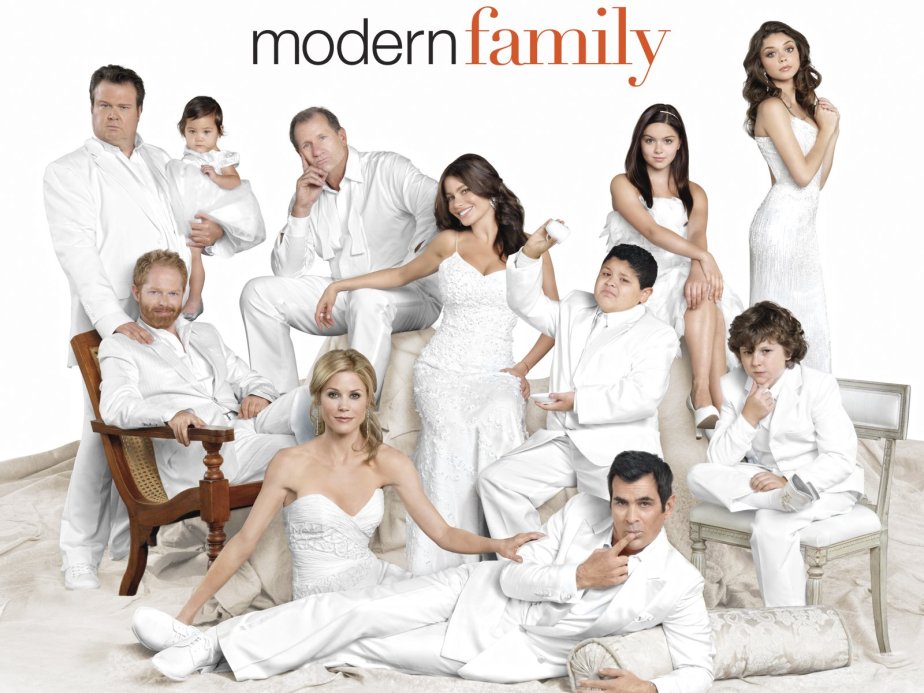
The Fosters follows the lives of an interracial lesbian couple, Stef and Lena, who are raising four adopted children and one biological child. One Day at a Time follows the life of single-mother Penelope Alvarez as she raises her two children with the help of her own mother who lives in her home. Modern Family showcases three families that are all interconnected and related. The first family is that of Jay Pritchett and his much younger wife Gloria as they raise her son from another marriage and later, their own biological child. The show follows Jay’s two children, Claire and Mitchell, and their families as well. Claire is part of a nuclear family with her husband Phil and their three kids. Mitchell is gay, and he and his partner Cameron have an adopted child together. The Fosters, One Day at a Time and Modern Family all render atypical familial arrangements.

Discussion

            The Fosters depicts a same-sex, interracial marriage and a family forged mostly from the U.S. foster care and adoption systems. When asked for their inspiration for the show, creator Bradley Bredeweg explained that there was a lack of representation of women raising families on TV. “We realized that there was a kind of a vacuum when it came to stories about women raising families. Many of our own friends are moms raising biological kids. Some of them have fostered and adopted. Suddenly, we realized that we had a story here that hadn’t been told on television before” (Valenza, 2014). Bredeweg and his cowriter chose to not only represent an atypical familial arrangement but also represent a non-stereotypical same-sex relationship.

Stef and Lena aren’t a typical same-sex couple and the way in which they raise their children and choose to divide their labor are reflective of this. Both Stef and Lena have full-time jobs and they chose to employ an egalitarian division of labor, or a relationship in which both partners do their fair share of the breadwinning, housekeeping and childbearing (Wade and Ferree, p. 254). This isn’t necessarily reflective of how many non-TV same-sex couples choose to split the labor. In fact, approximately 75% of same-sex couples choose to employ a neo-traditional division of labor and tend to gender household labor, also known as ‘heterogendering’ (Lecture 25). Interestingly enough, problems actually arise for Stef and Lena when Lena becomes pregnant and the couple must shift towards a more neo-traditionalist division of labor. Lena resents Stef for how much of the mental load and second shift has suddenly shifted to her, and the couple most overcome this obstacle together. Stef and Lena’s family is also comprised of mostly children who have been adopted. While one son is Stef’s child from a marriage to a man, the rest of the kids have been adopted. Several of the kids are biological half or full siblings of one another and they are not all the same race. The dysfunctional, blended family has their fair share of difficulties but Lena’s famous line “DNA doesn’t make a family; love does” is beautifully reflective of how atypical familial arrangements are just as natural and acceptable as that of nuclear families. Their family’s portrayal on screen has allowed for increased acceptance of this notion.

In comparison, the same-sex relationship that Cameron and Mitchell have in Modern Family is much different. Mitchell is the sole breadwinner of their family and Cameron is a content homemaker. They follow a neo-traditionalist labor division, where the woman is able to work if she desires but only if it doesn’t interfere with the “real” duty to take care of her husband and children (Wade and Ferree, p. 254). Even though Cameron and Mitchell are both men, Cameron is portrayed as the much more feminine partner in their relationship. He works a few short-lived jobs throughout the show, but he’s primarily the homemaker and Mitchell the breadwinner. Opposite Lena and Stef’s issues, Cameron and Mitchell are shown to have problems when Mitchell worries that their adoptive daughter loves Cameron more because he is able to spend more time with her. They ‘switch roles’ for several episodes before realizing that their arrangement works well the way it is and their daughter, Lily, loves both of her fathers in equally wonderful ways.

Perhaps at this point we should move on to the representation of single-parent families and divorced/separated characters on television. Before Penelope Alvarez was separated from her estranged husband Victor on One Day at a Time, the couple promised they would share most of the second shift, work that greets parents when they come home from work (Wade and Ferree, p. 248). But after they both re-enlist in the army, they need the help of Penelope’s parents to raise their new child. Fast-forward to the present and Penelope is separated from Victor, divorce pending, and is working full-time to support her family. Her mother, Lydia, lives with them and helps with Penelope’s two children as she works long hours as a nurse. A lot of the first season revolves around Penelope finding ways to make things work. She frequently laments to her mother that she “wasn’t supposed to have to do this [raising her family] alone” and that it’s difficult without Victor. Lydia does almost all of the childcare and housework. One of the very first episodes features Lydia ‘running away’ because she feels like the work she does to support the family is undervalued. This is a clear example of how unpaid labor is less valued than paid labor even though both are very important to making a family run smoothly. Unlike other shows, One Day at a Time represents this divide in way that is rather unique, with a grandmother, her daughter and grandchildren instead of a married couple. When Victor returns at the end of the season and his daughter Elena tells him that she is lesbian, he rejects her and walks out of her Quinceañera. Elena’s extended family rallies around her in support and love. One Day at a Time reinforces that families can definitely succeed without a male presence or father, a notion that was nearly unheard of on early television. It’s also important to note that One Day at a Time was based off a television show from the 70s of the same name that featured an all-white family in the same single-parent situation and very little intersectionality. The reboot offers valuable representation for Cuban-American families.

Paula Dail and Wendy Way conducted research in the late 80s and examined the representation of single-parent households and were surprised to find “a large number of single parent, male headed households being presented, since this is clearly atypical of society in general” (Dail and Way, p. 497). This is especially surprising when you consider that many television representations of male single-parents/divorcees involve them getting remarried. This is true for Modern Family, since Jay Pritchett got a divorce from his wife of 35 years and married a young Colombian woman named Gloria. Their age difference and the fact that they are an interracial couple are two things not frequently found on television, but their relationship offers important representation for couples that fall into either or both of those categories.

Jay initially appears to be emotionally callous and very standoffish with his step-son Manny, perhaps because Jay is from an older generation that placed the most value on biological children. However, it’s revealed that Jay regrets working too much and not being present with Claire and Mitchell, and he hopes to be a great step-father to Manny. Jay and Phil, the father of Claire’s nuclear family, both engage in forms of involved fatherhood, or the ideology that the ideal father today is nurturing, develops close emotional relationships with children, and shares the joys and work of caregiving with mothers (Lecture 24). This fact makes even Modern Family’s portrayal of the nuclear family a unique one that reflects the growing prevalence of involved fathers in modern society. Phil also defies many stereotypical gender roles because he’s overly emotional, frequently receiving Jay’s disapproval and gender-policing, but he doesn’t let this affect him.

Conclusion

All of these television shows depict families going through real hardships and overcoming true obstacles. Where much of the TV shows of the past represented nuclear families as “happy people with happy problems” (Press, p. 141), family members of the modern age paint a much truer picture of reality. No family is perfect, and no family member is without their own problems or dilemmas. Stef and Lena must deal with discrimination because they’re lesbian and interracial; Penelope faces sexism in her workplace for being a single mother; Jay and Gloria deal with age discrimination. Representation of these significant themes and of atypical family types allows for increased acceptance and belief that there isn’t just one type of ‘normal family’. TV sometimes follows society’s changing values, but TV can also cause society’s values to change by representing characters and themes that haven’t been shown before.

Shannon Davis says of increased representation on television, “By allowing the repetitive messages of television into the home, it is reasonable to believe that it can become a part of the individual’s assumptions, values, and beliefs” (Davis, p. 207). By letting these characters into our television sets and our hearts, the discourse surrounding family and gender is changing for the better.

References

Dail, Paula and Way, Wendy (1985). “What Do Parents Observe about Parenting from Prime Time” Television from the Family Relations, Vol. 34, No. 4 (Oct., 1985), pp. 491-499

Davis, Shannon (2013). “GENDER DIFFERENCES IN THE INFLUENCE OF TELEVISION ON GENDER IDEOLOGY? TV HOURS AND ATTITUDES TOWARD EMPLOYED MOTHERS: from the International Review of Modern Sociology, Vol. 39, No. 2 (Autumn 2013), pp. 205- 223

France, L. R. (2010, September 01). The evolution of the TV family. Retrieved from http://www.cnn.com/2010/SHOWBIZ/TV/09/01/families.on.tv/index.html

Hood-Williams, John (1986). “Soaps and the Sociology of the Family” from the Teaching Sociology, Vol. 14, No. 4 (Oct., 1986), pp. 270-272

Press, Andrea (2009). “Gender and Family in Televisions Golden Age and Beyond” from The Annals of the American Academy of Political and Social Science, Vol. 625, The End of Television? Its Impact on the World (So Far) (Sep., 2009), pp. 139-150

Valenza, R. (2016, February 02). Ever Wonder How A Show About Lesbian Moms Made It On ABC Family? Here’s How… Retrieved from https://www.huffingtonpost.com/2014/01/10/bradley-bredeweg-the-fosters_n_4569014.html

Wade, L., & Ferree, M. M. (2015). Gender: Ideas, interactions, institutions. New York: W. W. Norton & Company.

Between Vampires and Werewolves

Since their genesis, werewolves and vampires have been some of the most interesting and enduring creatures of folklore. While werewolves are often considered humans who transform into beasts each time the full moon makes its appearance, vampires are demons that thrive on the blood of the living. These two legends have endured for centuries and have been popularized by the entertainment industry, especially by depicting the creatures as brutal enemies in widespread television shows, films, and novels. In the novel Eclipse (of the Twilight saga) by Stephenie Meyer, werewolves and vampires have been enemies since the early Native American times. In the television series The Vampire Diaries, werewolves have been hunting vampires for thousands of years, since the reign of the Aztec kingdom. The relationship between vampires and werewolves in the novel Eclipse and an episode from The Vampire Diaries (“Bad Moon Rising”) is different in that the creatures in Eclipse agree to briefly put their differences aside to help each other rid the town of a common evil. However, their association is similar in that the vampires and werewolves of both works seem to have a mutual understanding of keeping the other’s secret and have been connected and bread against each other from their beginning.

Before examining the relationship between vampires and werewolves in these two popular texts, it’s important to understand the history behind the connection between them. In folklore it was sometimes believed that those who lived their lives as werewolves then became vampires when they died. In Serbia they were connected to such an extent that for some time the term vulkodlak referred collectively to vampires and werewolves. Some scholars believe that the animosity between vampires and werewolves can be traced back to Egyptian mythology where the godly brothers Set and Orisis hated each other from birth. Set, the wolf-like moon god, hated his brother Osiris who was immortal and god of the underworld. Osiris was often depicted looking like a vampire, with pale skin and red eyes. These brothers constantly fought in Egyptian myths. However, in most other folklore depictions of vampires and werewolves they were never at war with one another until the last few decades.

The Vampire Diaries follows a seemingly normal girl named Elena Gilbert as she discovers that vampires inhabit her town (Mystic Falls) and falls in love with one of them. The first mention of werewolves in this predominantly vampire-based show comes in the episode “Bad Moon Rising”, when Elena and the Salvatore brothers (who are vampires) begin to uncover a secret about one of the founding families of Mystic Falls, the Lockwoods. After realizing that the family is one of werewolves, the show’s twist on the werewolf curse is explained. It is traced back to the Aztec empire, when the land was plagued with both vampires and werewolves alike. In order to protect his people, an Aztec shaman cursed both of the creatures with ‘The Curse of the Sun and the Moon’, which “made vampires slaves to the sun and werewolves servants of the moon” and forever bound the two creatures together. This meant that werewolves could only transform in the presence of a full moon and vampires were permanently susceptible to sunlight. The legend goes on to explain that centuries of rivalry and competition for food and power have caused vampires to be a werewolf’s prey of choice. Since a werewolf bite is fatal to vampires, vampires hunted them almost to extinction in order to protect themselves. At the end of the episode, one of the Lockwood boys transforms into a werewolf at the peak of the full moon and attacks the Salvatore vampires, beginning the rivalry between vampires and werewolves that would last the entirety of the television series.

In Eclipse, the main character Bella Swan finds herself mixed up in a rivalry between vampires and werewolves. Coincidentally, the love of her life is a vampire and her best friend since childhood is a werewolf. Edward and Jacob, the vampire and werewolf respectively, both vie for Bella’s affection. In order for Bella to better understand his Native American tribe’s hatred of vampires and perhaps make her choose him instead of Edward, Jacob takes Bella to a tribal bonfire where his father explains the werewolf’s beginning. This telling of the werewolf story is much different than that of The Vampire Diaries but still ties werewolves to vampires. According to legend, long ago the tribe was attacked by ‘cold ones’ (vampires) and in order to stop them, the chief of the tribe’s spirit asked a giant wolf if it could share its body to vanquish the enemy. The wolf obeyed and after killing the cold ones, the chief realized that because of his bravery he could now transform into a wolf at will. He lived for two centuries and sired many children, many of which could transform into wolves at the age of adulthood as well. For the young people of the tribe, the ability to become wolves for the first time is only activated when faced with the threat of a vampire. Edward and his family (one entirely comprising of vampires) caused Jacob and the rest of his pack to phase for the first time and become wolves, ready to fight the new vampiric threat.

Since Jacob and the rest of the werewolves are so dangerous to vampires, they are feared by the vampires of the Twilight saga, just like werewolves are feared by the vampires on The Vampire Diaries. However, there is a rather large difference between the vampire/werewolf relationship in The Vampire Diaries and that of which in Eclipse. In Eclipse, the vampires and werewolves decide that they will form a truce and work together to rid the town of an army of new-born vampires that intend to kill all of the townspeople and Bella. The final chapters of the book describe a great battle where the werewolves and vampires are fighting side by side to protect the town. Their shared belief that these new-born vampires need to be destroyed, allows the vampires and werewolves to table their age-old feud and fight together. It also opens the door for future peace between the two groups of creatures, but this is not so in The Vampire Diaries. In the aforementioned episode “Bad Moon Rising”, the vampires make it clear that they are enemies with the werewolves. After the Salvatore brothers and Elena realize that werewolves exist, one of the brothers goes on to say that he would kill all of the werewolves in order to survive. When the transformed werwolves attack the Salvatore vampires at the end of the episode, the hatred between the two creatures is increased even further. This contrast in interaction between vampires and werewolves in The Vampire Diaries and Eclipse is one of the main differences in the portrayed relationship of the two supernatural beings.

The relationship between the vampires and werewolves in this film and literary work is also similar. In both works, vampires and werewolves are mutually dangerous to one another. Vampires are stronger than werewolves and can usually overpower them if they have their full energy. However, werewolves are biologically engineered to be vampire killers and in a pack can easily kill one. Werewolf bites, however, are not automatically fatal in Eclipse like they are in The Vampire Diaries. Both vampires and werewolves in both series wish to keep their supernatural identities a secret so despite their dislike, they have somewhat of a mutual respect towards each other. When Elena asks the Salvatore brothers if they will reveal the Lockwood family werewolf secret, the brothers refuse, since they as vampires also live in secret and wouldn’t want their own secret shared. Likewise, after the battle in Eclipse the werewolves and vampires work together to ensure no one discovers the new-born vampire army that has been slain and no human realizes the other’s supernatural secret.

Two of the most lasting legends of the last millennium are the vampire and werewolf. And like any enduring icon, these two creatures have been adapted and transformed for novels, television shows, and films. Early depictions of the vampire and werewolf dynamic never presented them as supreme enemies, which makes modern day portrayals of their relationship so interesting. In both the television series The Vampire Diaries and the novel Eclipse, vampires and werewolves are adversaries, engineered to kill one another. However in Eclipse, the two creatures set aside their differences to combat a greater evil. Despite their hatred towards another, vampires and werewolves in the show and novel have a mutual understanding about keeping the other’s secret. This understanding might stem from the fact that since their supernatural origins, the vampire and the werewolf have been inherently connected. And just as their association has changed from what it was at the genesis of the vampire and werewolf legend, their portrayed relationship will continue to change in the coming years and centuries.

References:

Meyer, Stephenie. Eclipse. London: Atom, 2007. Print.

“Bad Moon Rising” The Vampire Diaries. The CW Network. 23 Sept. 2010. Television.

Longinović, Toma. Vampires over the Ages: A Cultural Analysis of Scientific, Literary, and Cinematic Representations. San Diego, CA: Cognella Academic, 2014. Print.

Unpacking Comedy in The Heat

What comes to mind when you hear the word comedy? Perhaps you think of the humorous plays of Ancient Greece or your Favorite SNL skits and National Lampoons characters. Or maybe you recall any discourse that makes you laugh and smile. When it comes to narrative forms of comedy, there are several elements that commonly comprise a comedy film. Prevalence of humor, a happy ending, a ludic tone, an uplifting existential worldview and overall magnified disharmony/disorder are components that comedy films utilize to be successfully humorous. In Paul Fieg’s The Heat, all of these devices can be clearly identified. Despite the film’s overarching action/crime theme, the movie adheres to all principles of narrative comedy and almost perfectly fits the model that we’ve constructed in class for a typical comedy film.

The Heat follows Special Agent Sarah Ashburn of the FBI (Sandra Bullock) and Detective Shannon Mullins of the Boston Police Department (Melissa McCarthy) as they are forced to work together in order to take down a drug mobster. There are plenty of action/adventure films that also follow two law enforcement agents as they take down criminals, but many of them are actually quite serious in nature. The Heat’s ludic or playful tone eliminates most of the seriousness of the film and addresses somber topics in a humorous manner. A ludic tone usually lends unrealistic rules of normativity and plausibility and produces a story world in which there aren’t real-world consequences for actions. The Heat certainly has a ludic tone and the characters seem completely free of real-world consequences. The way in which violence/crime is addressed is especially telling of the film’s tone. There are many scenes where we normally wouldn’t laugh if there wasn’t a playful tone to the film. For example, Ashburn gets stabbed in the leg near the end of the movie but there’s never any real worry about her well-being or safety because of how Mullins and Ashburn handle the situation with humor. Ashburn also tries to save a man who is choking by performing a makeshift tracheotomy, nearly killing him. This entire scene would normally be very serious because the man is dying and starts choking on blood when Ashburn tries to “help him”, but viewers laugh the entire time because of how ridiculous Ashburn is acting. We know that the man isn’t actually going to die because of the film’s ludic and playful tone.

Mullins also finds herself in several normally serious situations that are instead humorous and playful. The entire scene when Mullins is chasing the man who’s cheating on his wife and the drug dealer through the streets is telling of how the film doesn’t really follow natural rules of normativity. She almost breaks the cheater’s arm and actually does end up breaking/spraining the dealer’s leg. The way in which Mullins interacts with these two men is probably not how a normal detective would behave and she doesn’t receive any punishment for her wild behavior. There’s also a scene when Mullins and Ashburn dangle the same dealer over the side of a deck and accidentally drop him. In both of these instances, there’s actually no real consequences surrounding their recklessness. Furthermore, the injured characters aren’t actually in any serious danger and the audience laughs at them instead of being concerned for their well-being. Even when characters do get shot/killed in the movie, there’s really no seriousness to these situations. These examples show that the tone of The Heat is playful and that the film’s world lacks any real hardships or dangers.

In a fictional world without consequence or seriousness, it only makes sense that there’d be a happy ending to Mullins and Ashburn’s stories. The protagonists achieve their goals, the antagonists get what they deserve and there’s communal and familial reconciliation. Mullins and Ashburn end up catching the villain and saving Mullins’ brother who was in danger. The film’s main antagonist, Larkin, ends up getting shot in the genitals and is sent to prison (a humorous way to round out the main conflict of the movie). Mullins is reunited with her family and they finally start to show some support for her police career, eagerly cheering as she’s awarded a medal for outstanding service. After having no romantic luck throughout the course of the film, it’s implied that Ashburn will start dating her colleague Agent Levy. Finally, Mullins and Ashburn become best friends and end up being able to work together because Ashburn takes a job in Boston instead of returning to New York. Virtually every conflict and challenge in the movie is resolved positively, which further solidifies The Heat as a comedy film.

In a fictional world without consequence or seriousness, it only makes sense that there’d be a happy ending to Mullins and Ashburn’s stories. The protagonists achieve their goals, the antagonists get what they deserve and there’s communal and familial reconciliation. Mullins and Ashburn end up catching the villain and saving Mullins’ brother who was in danger. The film’s main antagonist, Larkin, ends up getting shot in the genitals and is sent to prison (a humorous way to round out the main conflict of the movie). Mullins is reunited with her family and they finally start to show some support for her police career, eagerly cheering as she’s awarded a medal for outstanding service. After having no romantic luck throughout the course of the film, it’s implied that Ashburn will start dating her colleague Agent Levy. Finally, Mullins and Ashburn become best friends and end up being able to work together because Ashburn takes a job in Boston instead of returning to New York. Virtually every conflict and challenge in the movie is resolved positively, which further solidifies The Heat as a comedy film.

There is certainly an uplifting existential worldview to the movie, but this element of comedy is less present than some of the other elements. These worldviews relate to ideas about life and the nature of our existence as humans. In comedy films, they are usually positive ideas and affirm that everything works out as it should in the end. Every conflict in The Heat is resolved in the end, implying that in real criminal or law enforcement situations, the ‘good guys’ always catch the ‘bad guys’. In reality, this isn’t always the case and criminals frequently go free, but The Heat leaves audience members feeling like things will always work out in the end no matter how bleak problems might seem. Comedy also embraces humanism over egocentrism and usually charts characters’ paths toward betterment. In the film, Mullins and Ashburn both have their egocentric flaws. They’re both competitive, authoritative and mean to their colleagues. They must learn to work together and embrace their humanistic traits in order to solve the case. By the end of the movie, Mullins and Ashburn are more self-aware, optimistic and kind towards one another and the rest of the characters in the film. Comedy promotes and often requires this type of character development and adoption of positive personality traits, so The Heat possesses this element of the comedy model as well.

For a film to be a comedy, there obviously needs to be humor involved. Without humor and amusement, there wouldn’t be much to laugh at! However, the prevalence of humor in any given comedy movie various largely across a spectrum. Some movies are ‘laugh-out-loud funny’ while others just make us smile but are still humorous and comedic. I think a lot of the humor in The Heat is more clever and sardonic, opposed to slapstick or uproarious. There were definitely scenes in which I did laugh-out-loud. For example, the scene where Ashburn performs surgery on the choking man is absolutely hilarious, if not only because of Melissa McCarthy’s reactions in the moment. While big comic events like this one did make me laugh-out-loud, I’d argue that most of the humor in the film is more understated rather than uproarious. There’s a lot of one-liners and jokes that relate back to the theories we discussed at the beginning of the semester. Regardless, humor is present in virtually every scene of the film.

The Heat is also full of instances of magnified disharmony, disorder and disturbance. This disharmony can issue from many types of situations and there are examples of each in The Heat. Firstly, comedic disharmony is often issued from exaggerated egocentrism. Mullins and Ashburn are both pretty egotistical, competitive, self-absorbed and socially inept when it comes to interacting with their colleagues. It’s humorous to watch them interact with one another and the world around them. Disharmony also stems from fiascos/situations when plans and intentions go terribly (and comically) wrong. There are several mishaps and misfortunes that the main characters find themselves dealing with. Mullins trying to get out of her trapped car to no avail, Ashburn stabbing a man in the neck in a failed attempt to save him, Ashburn’s laughable attempts at flirting in the club, Mullins and Asburn’s drunken night at the dive bar and their unprofessional interrogations/takedowns of suspects are all fiascos. These scenes are hilarious and add to the comical disharmony between the two main characters and of the film as a whole.

Comedies also frequently revolve around ‘misintegration’ or characters being thrust into alien settings and functioning awkwardly in contexts where they feel out of place. “Fish out of water” comedies rely heavily on misintegration and I think it could be argued that the entire film is a variation of this type of comedy. Both Mullins and Ashburn are not used to working with a partner, so the entire film revolves around them getting used to one another and adjusting to this change. The film could be considered even more of a “fish out of water” comedy with regard to Ashburn because she’s in a completely different city than she’s familiar with and she’s not used to interacting with Bostonians. She also becomes involved in Mullins’ crazy family matters and since she was a foster child, she’s completely out of her element in this regard too.

There’s also a variety of miscalibration and misunderstanding, but less of these devices than other comic tropes. Miscalibration deals with characters treating situations with too much or too little seriousness/importance. At the beginning of the movie, Ashburn takes herself and the job way too seriously. She really plays off the fact that she’s a higher-ranking law enforcement official than the Boston police officers and is overly by-the-book during the opening drug bust. Mullins takes several situations too seriously also. She goes overboard when arresting the man who’s cheating on his wife and the petty drug dealer, and she also throws a crazy fit when she finds out from her chief that Ashburn is taking over the case. Most instances of miscalibration occur at the beginning of the film and are corrected later as the characters develop. With misunderstanding, comedy arises from confusion or alarm in regard to mistaken identity, double entendre or misapprehension of meaning. An example of misunderstanding would be when Ashburn mistakes the bearded man for Mullins in the dive bar. I think the entire bit with Ashburn, Mullins and the stolen cat could also be considered misunderstanding because Mullins wrongly thinks the neighbor’s cat is Ashburn’s and goes all the way to New York to steal it back. Lastly, there was only one instance of disharmony issuing from imposture (characters using disguises to advance goals) and this is when Mullins and Ashburn disguise themselves as provocative club-goers in order to steal LeSoire’s phone.

The Heat fits almost perfectly into the narrative comedy model we’ve constructed in class. It possesses a ludic tone, instances of humor in nearly every scene, magnified disharmony/disorder, an uplifting existential worldview and a happy ending. While some of the smaller comic devices are less present in the film than others, at least one instance of each of them can be identified. And while a comedy film need not adhere to this narrative model perfectly in order to be successful, The Heat combines all of the model’s elements to be an enjoyable and wildly funny movie.

Just Do It. Or Don’t…

We live in a society where brands are everything. Consumers use brands as symbols of themselves and their status, affiliation and beliefs. For many buyers, it’s less about the product they’re buying and more about the name behind it. Modern consumers have become extremely brand loyal and this is widely in part due to advertising practices. This brand loyalty, which I’d venture to call brand obsession, is unhealthy and is perhaps one of the most intriguing, but harmful effects of advertising.

I argue that brand loyalty/obsession constitutes two market failures. One such market failure is that of imperfect competition. Big brands have created monopolies in their industries/product fields. Since big brands have the funds to spend on advertising, they have the ability to eliminate the competition of smaller companies that don’t have enough money to spend. Smaller companies often never have the chance to get started in the market because of financial barriers to entry. This wrongfully convinces consumers that there aren’t alternatives because they see little advertising for non-brand competitors. These monopolies drive the prices of products up, which is why big-brand products are often more expensive than alternatives (think luxury jewelry or Nike shoes).

The other market failure that brand loyalty constitutes is that of Negative Externalities. Not only are these branded products often not the best of its kind on the market, big brands are frequently the companies cutting corners to make the most money or contributing to ethical/environmental/societal issues. Big brands have the ability to change the public perception about certain issues, but instead often contribute to the problem. Nike used sweatshops to produce their shoes. McDonald’s continues to feed consumers unhealthy food and contribute to growing global obesity. Coca-Cola has a history of violating workers’ rights in their bottling factories. Samsung used cheap batteries that exploded. Apple slowed down their phones. You’d think these unethical business practices would kickstart the market mechanism and put them out of business, and yet we still are ever-faithful to these brands because advertising “helps” us overlook these issues. By embracing these big brands, our society is saying we’re fine with paying more for potentially worse products and we’re fine with supporting companies that don’t have ethical or environmentally friendly business practices, all because of the power of the brand.

There are many mechanisms that work together to provide a multi-faceted approach to protecting consumers. Not every mechanism has been utilized in the fight against big brands. Firstly, consumers are the market mechanism and have complete sovereignty over their choices. Unfortunately, many consumers still choose to support big brands, despite often better alternatives, negative externalities and unethical practices. Big-brand advertising has made it difficult for consumers to make educated decisions about the products they buy.

Government regulation of these brands has been slim. There have been few court cases against major brands and those that have been leveled against them are usually dismissed or go in favor of the businesses. For example, Kasky vs. Nike brought Nike’s unethical sweatshop practices to the courts but Kasky lost his first case as well as several appeals. The Federal Trade Commission, which oversees deceptive advertising practices and monopolies, also has been lenient with big brands. If the government did leverage its judicial and executive power over some of the practices that big businesses engage in that lead to negative externalities, there could be real change in the operation of these big brands. Self-regulation within the industry has been slightly better, but most internal regulation is influenced by consumer protesting anyway. Companies have pulled their own advertisements and commercials off of the air. For example, Pepsi quickly stopped airing its insensitive Kendall Jenner protest commercial after it was met with indignation. But while many consumers were upset with the ad, it did little to decrease sales.

      Consumers can find that most of their favorite brands do have codes of ethics on their websites, but I can’t help but think that many of these codes of ethics were put in place (and published on the internet for every consumer to see) to save face or use as proof of ethical practices. Nike’s code of ethics clearly states, “Every supplier factory that makes products for NIKE, Inc. must meet a rigorous set of compliance requirements”. Yet, many activists believe Nike is still using sweatshops and as of 2015, Nike suspiciously doesn’t allow outside inspections of its factories.1 These codes of ethics also haven’t stopped big-brands from releasing ethically questionable advertisements either. As for media ethics, while media organizations do have the right to refuse any non-political advertising that they find distasteful, most media outlets have never refused big-brand ads.

      Consumer journalism has been active in the movement against big brands, both with consumer reporting and consumer documentaries. Journalists like Jeff Ballinger were key in investigating Nike’s sweatshops and then later published the first exposés on the company. Consumer documentaries have also critiqued big-brand obsession and these brands’ unethical business practices. Michael Moore’s film The Big One follows his attempts at interviewing the CEOs of our favorite brands about their business practices, specifically asking Phil Knight about Nike’s sweatshop practices to which he evades a concrete answer. These documentaries and investigative exposés have brought big brands into the public spotlight and have definitely played a role in consumers beginning to fight these brands themselves

      Consumer activism has been the biggest contributor to changes in big-brand loyalty. On the personal level, many consumers have taken to social media to critique big-brands; this is clear when you scroll the feeds of many companies’ profiles. Boycotts and buycotts have also been monumental in starting to dismantle our society’s obsession with brands. There have been many consumer campaigns organized against big businesses and brands. Many consumers actively boycott companies that engage in unethical business practices, like Nike. Or when it was discovered that Chick-fil-A donated profits to anti-LGBTQ+ groups and politicians, consumers quickly took to protesting this. Campaigns like #DeleteUber or #GrabYourWallet were also started to fight consumerism and big-brands, but also were intended to fight political decisions made about the market. In terms of buycotts, the “Buy Local” and “Eat Organic” movements have been enormous for smaller brands and companies to get their products to consumers, without much advertising. These consumers are changing society’s perception of brand loyalty. Big brands have the power to change the world through their visibility, just need to be spurred in that direction by consumers. I don’t believe all brand loyalty is bad. Many brands have garnered loyalty and deserve this allegiance because of their sound business practices and quality of their products, but these brands that we should be supporting are usually not the companies we see being advertised for. I believe as consumer activism and consumer journalism continue to shine light on the negatives of faithfully pouring our cash into these big brands, increased usage of the other protection mechanisms will follow and slowly, the permeance of “the brand” will falter.